

For homeowners in Inglewood, replacing an aging roof can raise an immediate question: do the old shingles really need to come off first? With Southern California sun, seasonal rain, and older homes throughout neighborhoods such as Morningside Park and North Inglewood, the condition of the existing roof matters just as much as the material going on top.
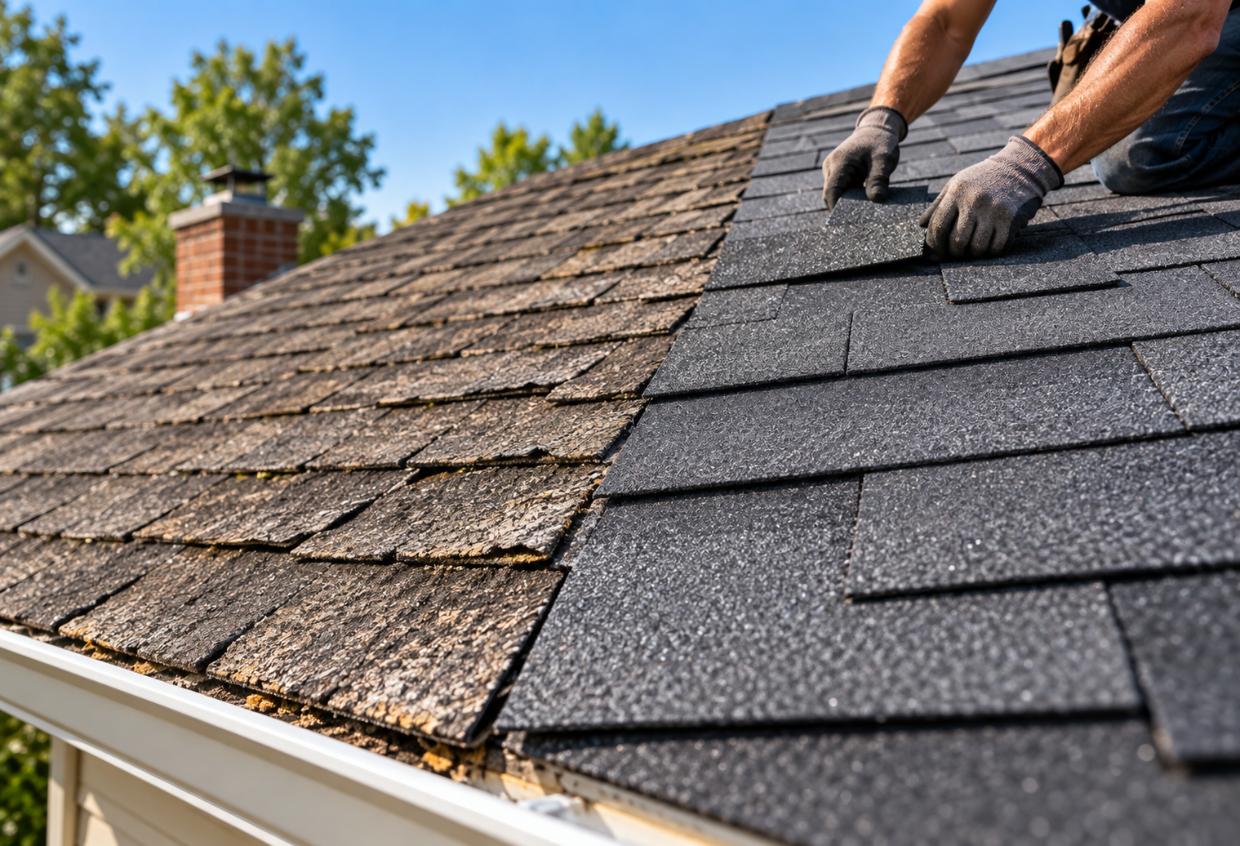
In some situations, new asphalt shingles can be installed over an existing shingle roof. However, installing a second layer is not automatically the best choice. The roof deck, number of existing layers, condition of the shingles, flashing, ventilation, and applicable building requirements all need to be considered before deciding between an overlay and a complete tear-off.
What Inglewood Homeowners Should Know
-
Installing new shingles over one existing layer may be possible when the current roofing system and roof deck are in suitable condition.
-
A tear-off gives the roofer an opportunity to inspect the roof decking for hidden deterioration before new materials are installed.
-
Strong Southern California sunlight can accelerate visible aging, curling, cracking, and granule loss on asphalt shingles.
-
Homes throughout Los Angeles County can experience roof leaks during periods of winter rain, making existing moisture problems especially important to identify before reroofing.
-
Multiple roofing layers add weight and can make future roof repairs, leak detection, and eventual replacement more complicated.
Can You Install New Shingles Over Old Shingles?
You can sometimes install new shingles over old shingles, but only when the existing roof provides a suitable base and the reroofing method meets applicable requirements. An overlay should never be treated as a shortcut around damaged decking, active leaks, deteriorated flashing, or other underlying roof problems.
The existing shingles generally need to lie reasonably flat. Severely curled, buckled, brittle, or uneven shingles can create an unstable surface that affects how the new roof looks and performs.
For an Inglewood homeowner, the first step should be determining what is actually underneath the visible roofing material. Older properties may have previous repairs, additional roofing layers, or decking problems that cannot be evaluated accurately from the ground.
Why Does This Roofing Decision Matter in Inglewood?
This roofing decision matters in Inglewood because local roofs spend much of the year exposed to strong sunlight, heat, airborne debris, and changing weather before seasonal rainfall tests vulnerable areas. Covering an existing problem with another layer of shingles does not correct the condition underneath.
Homes around Morningside Park, Fairview Heights, Century Heights, and Arbor Village include properties of different ages and roof designs. Some have straightforward pitched roofs, while others may include additions, transitions, or lower-slope roof sections that require different roofing approaches.
Properties near busy corridors and communities such as Hawthorne, Lennox, and Ladera Heights also experience the same broader Los Angeles Basin conditions. That makes careful evaluation more useful than automatically choosing whichever reroofing option appears less disruptive.
Wide Awake Roofing helps property owners evaluate roofing conditions and determine an appropriate path forward. After that initial assessment, we can explain whether an existing roofing system appears suitable for reroofing or whether removing the old material would provide a better foundation for the work.
What Local Roofing Conditions Should Homeowners Consider?
Local roofing conditions should include sun exposure, existing roof age, drainage, previous repairs, and signs of moisture intrusion. Without client-supplied inspection records or proprietary local datasets, these are best treated as regional roofing considerations rather than claims about every roof in the area.
Southern California roofs can spend long periods under direct sunlight. Asphalt roofing materials naturally weather over time, and areas with heavy exposure may show fading, granule loss, cracking, or brittleness.
Then seasonal rain can reveal weaknesses around penetrations, valleys, flashing, roof edges, and previously repaired sections. If those problems already exist, installing another shingle layer may hide them rather than resolve them.
What Are the Warning Signs That an Overlay May Be a Poor Choice?
Warning signs that an overlay may be a poor choice include visible roof deterioration, recurring leaks, uneven surfaces, and indications that the material underneath needs attention. Homeowners should watch for conditions such as:
-
Shingles that are curling, buckling, cracked, or badly deteriorated.
-
Soft or questionable areas of roof decking.
-
Interior ceiling stains or previous leak damage.
-
Sagging or visibly uneven sections of the roof.
-
Damaged or deteriorated flashing around roof penetrations.
-
Multiple existing roofing layers.
-
Persistent repairs in the same roof area.
-
Missing shingles or widespread granule loss.
From a driveway in Inglewood, a roof may appear generally intact while still having problems beneath the shingles. That is why visible appearance alone should not determine whether another layer can be installed.
When Should You Call a Professional Roofer?
You should call a professional roofer when the decision involves determining the number of roof layers, checking decking condition, investigating leaks, evaluating flashing, or deciding whether reroofing is appropriate. Homeowners can safely perform basic visual observations from the ground, but climbing onto an aging roof creates unnecessary risk.
You can look for missing shingles, debris accumulation, sagging areas, damaged edges, or visible wear without getting on the roof. You can also check ceilings and attic areas, when safely accessible, for stains or moisture symptoms.
A closer roofing evaluation is especially worthwhile before the rainy season or when an older roof has already needed repeated repairs.
What Common Problems Can Make Installing Over Old Shingles Risky?
The most common problems that make installing over old shingles risky are trapped defects, uneven roofing surfaces, hidden decking damage, and unresolved water entry points. These conditions matter because the new roof depends on what sits beneath it.
1. Existing leaks: A new surface layer does not automatically correct the source of a leak.
2. Damaged decking: Removing existing shingles allows deteriorated or questionable decking areas to be identified more directly.
3. Uneven shingles: Curling and buckling can affect the appearance and installation surface of the new roofing material.
4. Flashing problems: Roof-to-wall transitions, vents, chimneys, and other penetrations require proper water-shedding details.
5. Previous roof layers: An existing second layer can change whether another reroofing approach is appropriate.
These issues are particularly relevant for older Los Angeles County homes where the complete maintenance history may not be known.
How Can Homeowners Help Prevent Premature Roofing Problems?
Homeowners can help prevent premature roofing problems by keeping drainage areas clear, watching for visible damage, addressing leaks promptly, and arranging inspections when roof conditions become questionable. Preventive attention is especially helpful before seasonal rain reaches Southern California.
Check gutters and drainage paths for debris when it is safe to do so. From the ground, look for missing, lifted, or visibly deteriorated shingles. After rain, check interior ceilings for new discoloration.
DIY maintenance should stop where climbing, roofing removal, structural evaluation, or leak diagnosis begins. Roof surfaces can be slippery, fragile, and more dangerous than they appear.
What Results Can You Expect From an Overlay or Tear-Off?
An overlay can provide a new roofing surface when the existing roof is an appropriate candidate, while a tear-off provides greater access to the roof deck and underlying components. Neither option should be selected based on price or speed alone.
A properly evaluated overlay may reduce the amount of existing roofing material that must be removed during that project. A tear-off, however, allows the old roofing to be removed so the underlying surface can be inspected before the replacement system is installed.
For many homeowners, knowing what is beneath the shingles can be an important advantage when planning a long-term roofing investment.
What Mistakes Should Homeowners Avoid?
The biggest mistake homeowners should avoid is assuming that covering old shingles automatically solves an old roof problem.
Mistake: Installing over shingles that are badly curled or damaged.
Consequence: The new roofing surface may inherit an uneven base.
Better approach: Evaluate the existing roof condition first.
Mistake: Ignoring previous leaks.
Consequence: An unresolved water-entry problem may remain hidden.
Better approach: Find and address the source before reroofing.
Mistake: Choosing an overlay only because it involves less removal.
Consequence: Important underlying conditions may remain unseen.
Better approach: Compare the condition, limitations, and long-term implications of both options.
What Is a Common Inglewood Roofing Scenario?
A common Inglewood roofing scenario is an older asphalt-shingle roof that still looks relatively complete from the street but shows aging, previous patchwork, or signs of leakage near a penetration or roof transition. This is a scenario, not a specific Wide Awake Roofing case study.
In that situation, immediately adding another layer may not answer the most important question: what condition is the existing roofing system and roof deck actually in?
Evaluating those components first gives the property owner better information for choosing between reroofing and removal.
Which Roofing Services Can Help?
Roof inspection, roof repair, reroofing, and roof replacement services can help determine whether existing shingles should remain or be removed. The appropriate service depends on the condition of the roof rather than simply its age or appearance.
Our goal is to identify visible roofing concerns, discuss the available options, and help homeowners understand what each approach involves.
How Do an Overlay and a Tear-Off Compare?
An overlay usually involves installing approved new roofing material over an existing qualifying layer, while a tear-off removes the existing roofing so the underlying deck can be evaluated before replacement.
| Consideration | Shingle Overlay | Tear-Off and Replacement |
|---|---|---|
| Existing shingles removed | Usually no | Yes |
| Roof deck access | Limited | Greater access |
| Suitable for damaged existing roof | Often not | Allows underlying issues to be addressed |
| Added roofing layers | Yes | Existing roofing removed |
| Future roof evaluation | Can be more complicated | Starts with a cleared roofing surface |
| Best choice | Depends on roof condition | Often considered when underlying inspection is important |
The right option for an Inglewood property should be based on the actual roofing system, not a one-size-fits-all rule.
What Areas Do We Serve Around Inglewood?
Our local roofing work can support homeowners in Inglewood and surrounding communities within our confirmed service area. Nearby places commonly associated with the area include Hawthorne, Lennox, Ladera Heights, and other parts of the South Bay and greater Los Angeles area.
What Can Happen If You Ignore an Aging Roof?
Ignoring an aging roof can allow small defects to become larger roofing or moisture problems, especially when seasonal rain reaches already vulnerable shingles, flashing, or penetrations. Waiting can also make it harder to determine whether a limited repair remains practical.
Sun exposure does not stop simply because a roof still looks acceptable from the sidewalk. If shingles are already brittle, curling, leaking, or repeatedly repaired, scheduling an evaluation before the next significant weather event can help clarify your options.
Frequently Asked Questions About Installing Shingles Over an Existing Roof
Can you put a second layer of shingles on a roof in Inglewood?
A second layer of shingles may be possible when the existing roof, roof deck, and applicable requirements allow it. The existing material should be evaluated first because damaged, uneven, leaking, or already multilayered roofing may make a tear-off the more appropriate approach.
Is it better to remove old shingles before installing new ones?
Removing old shingles provides direct access to the roof deck, which can make it easier to identify deterioration or other underlying problems. Whether removal is necessary depends on the existing roofing system, its condition, and applicable requirements for the property.
Does Southern California heat affect old asphalt shingles?
Southern California sun and heat contribute to the normal weathering of asphalt roofing materials over time. Homeowners may eventually notice brittleness, cracking, fading, curling, or granule loss. These conditions should be evaluated before another roofing layer is installed.
Can new shingles stop an existing roof leak?
New shingles should not be treated as a way to simply cover an unidentified roof leak. The source of water intrusion should be found and addressed. Leaks can involve shingles, flashing, penetrations, transitions, drainage, or underlying roofing components.
Should I have my Inglewood roof checked before the rainy season?
Having a questionable or aging Inglewood roof evaluated before periods of heavier seasonal rain can be useful because existing defects are easier to address before they allow water into the building. This is especially relevant if you have already noticed damaged shingles or ceiling stains.
Can you tell how many shingle layers a roof has from the ground?
You usually cannot determine every detail of an existing roofing assembly accurately from the ground. A professional evaluation can help identify previous layers, visible deterioration, flashing concerns, and other factors that affect whether reroofing over existing shingles is appropriate.
Are older Los Angeles County homes more likely to need a tear-off?
An older home does not automatically require a tear-off, but properties with unknown roofing histories may need closer evaluation. Previous reroofing, repairs, moisture exposure, and decking condition all matter more than the age of the house by itself.
Is an overlay always cheaper than replacing the roof completely?
An overlay may involve less removal work, but homeowners should not choose it based on initial project scope alone. The condition of the existing roof, future repair considerations, and whether underlying problems need to be addressed should all be part of the decision.
Protect Your Inglewood Home With the Right Roofing Approach
Choosing between installing new shingles over an old roof and removing the existing material starts with understanding what condition the roof is actually in. We help local homeowners evaluate visible roofing concerns and understand practical options before moving forward.
Get Clear Answers Before You Reroof
A careful roof evaluation can help you make a more informed decision about protecting your Inglewood property.